

Here's a little bit of breaking news about what we're doing to strengthen relationship in the network.

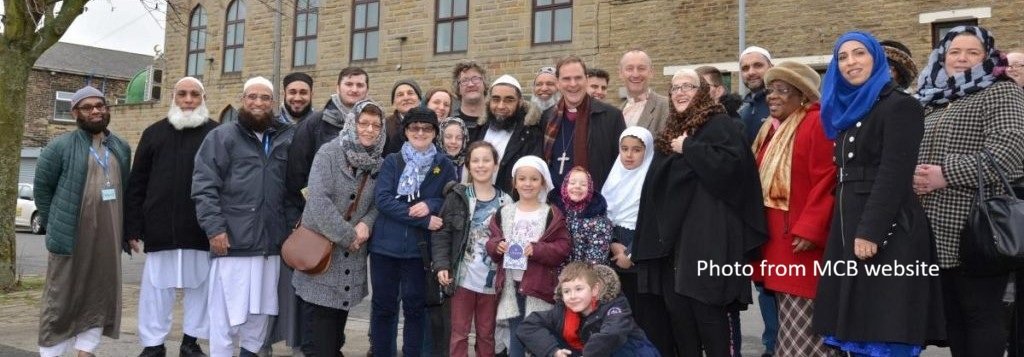
In September, the Muslim Council of Britain are organising a nationwide Visit My Mosque (VMM) programme. https://vmm.mcb.org.uk/ This is a good opportunity to organise a party from your church to visit a local mosque.
What will people say? Collectivist cultures, like those from which our Muslim neighbours come, prioritize the needs, goals, and harmony of the group over individual desires. Thus, in big decisions the phrase “what will people say?” is very meaningful. This is especially so in making any counter-cultural decisions, like in matters of faith.
How can you put on an event for your Muslim neighbours as a church or Mahabba group? First of all, you need a pool of ‘warm’ contacts.
A Mahabba member shares advice on how Christians can help traumatised refugees and asylum seekers in the UK.
Together we are a network, not an organisation or agency. We are connected by a shared purpose - our vision and values. Thriving networks relate, share and learn from one another. Creativity and initiatives come from all parts of the network and benefit the whole. Networks reproduce - each new group enriches and adds value for every other group and the network as a whole.

Image Unsplash
Last year many of us contributed to a review of the Mahabba vision, seeking greater clarity and focus for the Network. In summary Mahabba, wherever it’s found, exists
‘to see ministry among people of Muslim heritage become a normal part of church life – it is a relational network encouraging prayer, enabling all Christians, envisioning the Christian community and engaging with Muslims’.
Work is continuing putting flesh on the bones of these words and this is a good time to expand on the vision and hear more from the network about how it is being worked out in practice.
Ministry among Muslims a normal part of church life – this is the vision, the picture of the future, we’re looking to, believing and working for. One church leader puts it like this:
“If you’d told me eight years ago that one day almost a quarter of our congregation would be people from a Muslim heritage, I’d have laughed in disbelief. Back in 2011 we took a risk. Having planted a small intercultural church in the city centre, we felt God leading us to bring the plant back into the sending church. We were joined by some returning missionaries and, with their help, the tiny handful of believers from a Muslim background began to grow.
Not everyone in our predominately white, middle class, congregation was enthusiastic about the changes. You might be greeted at the door with a warm Afghani handshake, or served coffee by a smiling group of Kurdish young men. Occasionally we would include a song from Iran in our worship. However, we were convinced that we were on a journey that reflected the heart of God. We taught from the books of Ruth and Acts about the importance of welcoming foreigners into God’s household. We listened month by month to baptism testimonies telling how Jesus is drawing people from the middle east to himself through dreams, visions and miracles. Gradually God has softened our hearts and deep cross-cultural friendships have developed.
There’s still a way for us to go, but as a church we’re not only beginning to reflect the diversity of the city around us; we’re also beginning to taste the rich cultural blend of the heavenly Jerusalem.”
Could you pause and pray now for a local church you know - that they will set out on that journey of prayer, welcome, bridge building, friendship and disciple-making. In the coming months these Network Updates will continue to unpack more of the vision.
Please share your thoughts, experiences or expectations on the Discourse discussion thread below or add a comment below.
May God give us renewed expectation as we catch more of his heart and journey together.
N.B. requires account to sign on - see here for more details
Phil is a member of the Dashboard Circle team, with a particular focus on national development.

Image Unsplash
Jill brings an encouragement from a local group getting together with Muslim friends to share God’s story
“What could be a better time than this for Muslim and Christian women to meet together in friendship?”
These were the first words that were said at the first of our Prophets’ Stories (see below for more info) meetings. It was the day after the Christchurch shootings and we were able to come with flowers and stand together with Muslim friends as they grieved. Then a month later when we met again, it was just after the Sri Lankan church bombings, and this time the Muslim ladies came with flowers and stood with us.
These two international tragedies cemented our desire to meet together in unity and look at the stories of the prophets. We had asked our friend, a young lady leading the women’s work at one of the town’s mosques, if she thought there might be a group of ladies who would like to look together at the stories we have in common and see what we can learn together about God and about ourselves. She was very enthusiastic and thus it was that our meetings began.
About a dozen of us, half Christian and half Muslim, have enjoyed getting to know each other. A few of the Christian women had never really met a Muslim, and some of the Muslim women had never met a real follower of Jesus.
“I walked in sceptical to other people’s views and worried about how they would react to opinions, but ended on a positive high.”
“I arrived, not really knowing what to expect. Now I’m really glad I came; I’m relaxed and excited for the next one.”
It was a great joy to see ladies who had only just met sharing deeply about their joys and their difficulties, and then discussing together what we learned about God from the stories of Jonah and Joseph. We talked, among other things, about what it means to trust God in difficult circumstances, being obedient to God, and the power of forgiveness in families.
Ramadan and school holidays interrupted our meetings – but we look forward to starting again in September and seeing what God will do!

Image Unsplash
Things may seem to have gone quiet – but – a lot is happening behind the scenes. I was asked to update you now, to tide us over until September, when things pick up again in earnest.
My role in the Mahabba Network is to help implement our core purpose and vision; working with the network to ensure we have what is needed to flourish. A key part of this is to increase connectivity through sharing across the network.
An important felt need in the network seems to be how we respond to the current rise in strident attitudes to Muslims – especially in some Evangelical circles. This is being expressed verbally from some pulpits; online audio/visual materials; and in combative behaviour.
Since the change in political climate in the USA, I have noticed that some Evangelical groups in the UK are openly seeking to discredit Muslims, as though it were a new clause of the Great Commission. What’s more even fellow Christians are being denigrated publicly online and in print, for responding to Muslims with ‘grace and truth’. It would be great to hear from you if you are noticing anything along these lines, where you are.
It was suggested that the network should devise a “position statement” on ministry with ‘grace and truth’. This could be available on the website to point people to. It could be an effective way of dispelling misunderstanding that ‘grace and truth’ is a “soft” option; “naïve” or “liberal”. It would be to clarify where the term ‘grace and truth’ comes from; what the Bible says about it; why it is ‘Christly’; why it is part of historic Christian witness; how it can be modelled in practice; as well as identifying the political issues which are feeding ‘right wing’ strident views.
My sense is that people linked to the Mahabba Network, are engaging with ‘grace and truth’ on a spectrum from the ‘relational’ to the ‘robust’. So over to you – Do you concur? Would such a statement help us? How do you understand the term ‘grace and truth’? How far does it resonate with what you are doing and seeing in your area? My own feeling is that a position statement would also help to profile the unique contribution the Mahabba Network is making to the national conversation.
It would be great if you would add your thoughts to the Discourse discussion thread; or chat about your views to the Regional Facilitator in your area. Please be assured, whatever is important to you is certainly of keen interest to the network. Thanks for reading this and let’s keep one another covered in prayer through August.
Have a great remainder of the summer!
N.B. requires account to sign on - see here for more details
Steve is a member of the Mahabba team, with a particular focus on development and strategy

Image Unsplash
I have recently been running the ‘Come Follow Me’ course with a new Believer from a Muslim background one to one. I have been moved by the commitment of the student. One course question asks the student ‘What are the costly things you might have to give up’? ‘a. Your reputation in the community, b. your employment or business, c. your family, d. your property or inheritance, e. other’? His answer was ‘All of them!’ Matthew 19:29 is very apposite for such followers!
The method of learning used in Come Follow Me is ‘Head, Heart and Hands’. The ‘Head’ part is covered by the student reading the weeks notes alone and answering simple questions on them in their book before meeting to discuss it with their advisor. When the student has done this it works very well. I find that my student comes to meet with me already having a good grasp of the subject. Our meeting is where the ‘heart’ section of teaching applies. As we review the basic content of the weeks study together, perceptive questions are asked (given in the Advisors Guide). These really help to draw out the students feelings and experiences on the subject. This is a very important part of the course. The course outwardly may appear to be academic as it is in book form, but these questions really make it come alive. At the close of each week a practical assignment is given that relates to that weeks lesson. This is the ‘hands’ section. As the Advisor and student pray and live out the course during the following week, practical discipleship growth can take place.
The examples in the book are all taken from the Muslim cultural context, with Muslim sounding names and illustrations. Many of the examples are taken from real life. The other general examples are also extremely well informed on the Muslim experience of life. I have often heard my student exclaim ‘This was written for me!’ and ‘the author knows my situation!’.
The subject matter covers conventional discipleship matter such as ‘New Life in Christ’, ‘Talking with God’ and ‘God’s word for Us’. It also covers subjects you may not often find in a discipleship course such as ‘Reasons for Persecution’, ‘Husbands and wives’, ‘solving our disputes’, ‘Fate and Magic’. All of the twenty subjects draw on a wealth of understanding of Muslim culture and the challenges faced by a new disciple to Jesus. The Advisor Guide contains very helpful cultural clues about Islam, so that a novice to Islam can run the course very effectively.
The course is also available in numerous languages which enables an advisor and student to operate in two languages if necessary. In my case I have an English Advisors guide and my student both the English and Farsi translation. It is a little cumbersome getting four books out each time, but it has ensured that the meaning of weeks subject is communicated clearly.
Finally books only get you so far. The course requires an Advisor to be prayerful, hospitable and willing to walk the walk with the student. If they do, they will find it almost as rewarding as the student!
Further details on the course can be found here: https://come-follow-me.org/about
Chas is a member of the Network Circle team and as a Regional Facilitator, supports groups in the London region.

Image Unsplash
“People seek for methods of learning to love God. They hope to arrive at it by I know not how many different practices; they take much trouble to remain in the presence of God in a quantity of ways. Is it not much shorter and more direct to do everything for the love of God, to make use of all the labours of one’s state in life to show Him that love, and to maintain His presence within us by this communion of our hearts with His? There is no finesse about it; one has only to do it generously and simply.”
We hear many statistics about the decline of Christianity in the West. There is even a dedicated Wikipedia entry called, ‘Decline of Christianity.’ It seems to be an assumption even within the Church that makes us shake our heads and question the state of the world.
What are these statistics based on? They generally use census data or depend on surveys that ask about membership of official organisations, or about attendance of formal events. Yet, sociologists of religion have realised that this cannot be the full picture of religious life.
Now the study of religion has shifted beyond the old dualism of ‘official’ and ‘folk’ religion that suggested a life of faith is lived either in orthodox beliefs and practices or popular expressions of visits to shrines, pilgrimage, ritual healing and stories of miracles. As if we couldn’t do both. See for instance the growth in pilgrimage.
Currently sociology of religion is studied as ‘Lived Religion.’ It pays attention to wherever and however we find people invoking the sacred. This can be on the sports field, at the work desk, in the washing of a patient’s hands or the telephone conversation with a hurting friend, or, as with Brother Lawrence, when we’re peeling potatoes.
Our daily activities are motivated and shaped by our culture, beliefs and the authority we subscribe to, which in turn is shaped by a religious heritage. All of these factors combine to shape our intentions when we engage with our neighbour. Is it out of guilt or love, honour or shame, fear or power? The question therefore is to see what paradigms of thought underlie Lived Religion.
The WhenWomenSpeak network brings together thinking and practice that help us question our assumptions, not only about the beliefs and practices of others, but also to see how the Bible addresses these paradigms, and sometimes help us understand our own motivations in a new light. At a recent workshop in Bristol, we started exploring paradigms of honour and shame, rites of passage and purity to hear from each other how these frameworks help shape deeper connection to our neighbour.
Try this for yourself. Read Matthew 15 and see which parts are shaped by ideas about purity and which have to do with honour and shame. How does Jesus display his divinity in an everyday activity?
Georgina is a member of the Network Circle team and as a Regional Facilitator, supports groups in the West region.

“The Mission [or church] which perpetuates habituated practices is doomed, due to non-responsiveness to nuance and change.”
We seem hard-wired to “maintain” the existing, rather than “establish” what’s needed! The Great Commission was first entrusted to spiritual entrepreneurs (‘apostolic’ people), however, mission structures are largely configured around ‘maintenance’; a focus on the regions behind us, rather than ‘pioneering’ the regions beyond us (2 Corinthians 10:16).
When necessary ‘regions beyond’ people pull away from the pack; aim for the essence of the Great Commission; research the context; prayerfully reflect; galvanise and take radical action. The seeds of past DNA and vision endure (Job 14:9) but not methods and structures. Mahabba is an expression of ‘new wine’ (Matthew 9:17) and its “network” structure is a ‘new wineskin’.
While the fledgling needs maintenance, 90% of the global mission taskforce is being placed in ‘Christianised’ areas with a viable national church (1). Little wonder that – generally speaking – mission structures have dropped the ‘apostolic’ baton of their pioneers and hold to the status quo by rationalising; collaborating to retain economy of scale to prolong a status quo that’s in terminal decline. Some will do anything but embrace radical change, which might be threatening to the organisation’s ‘heritage’.
The former structure has served very well for 150 years but over time, they have succumbed to the pressure to adopt clunky formal practices. An unintended consequence is that it has led to a customer/supplier relationship between mission agency (the specialist) and local church (client). The system has unwittingly marginalised the local church in the mission process.
Pressure is building for the ‘democratisation’ of mission because more churches are taking ownership, which makes “network” an emerging structure to watch. This ‘new wineskin’ is now needed due to issues such as globalisation; Christians travelling overseas for work; the ‘ends of the earth’ have come to Jerusalem and is living in our postcode; a felt need by Christians to be ‘up-skilled’ for the cross-cultural context we now live in.
The wineskin to engage with this is not the ‘formal’ but in ‘network’. This is why I declined the title “director/national facilitator” of the Mahabba Network, choosing instead to prayerfully explore with the team, how best to build its existing aspiration to be a network. I am excited to be part of fulfilling the vision of seeing: ‘Fruitful ministry among people of Muslim heritage as a normal part of church life. This is born out of an ‘apostolic’ instinct. It seeks to co-operate with God to bring the unseen into existence rather than re-hash the past, which is tantamount to re-organising deckchairs on the Titanic.
We are living in a “pan-geographical” and “issue-based” era of mission (2). Local churches are therefore baptising and nurturing people with Muslim heritage (my own included). The Mahabba Network exists to encourage, facilitate and resource this trend; this is why I sense the Lord’s permission to join the leadership team – not as a ‘corporate’ leader but – as a “gift-person” in God, who carries some key roles, including “strategic implementation”.
I look forward to connecting with everyone in the network.
Ralph Winter – U.S. Center for World Mission & Intl. Society for Frontier Missiology
The 3 eras of modern mission: 1792 onwards “Coastlands” (William Carey et al); 1865 onwards “Inland” (Hudson Taylor et al); 1934 onwards non-geographical sites “Unreached Peoples” (C. Townsend & D. Mc Gavran) from everywhere to everywhere. http://www.missionfrontiers.org/issue/article/four-men-three-eras
Steve is a mission analyst, trainer, writer and speaker. Contactable on 07815 042033 or e-mail stevebell2101@sky.com

By Chas from Mahabba’s Network Team
“As the Father has loved me, so have I loved you. Abide in my love.”
Do you remember how you first began to love Muslims? There are many ways we may have begun. How can this love be sustained in the coming year? Firstly, love comes not from ourselves rather ‘love is from God, and whoever loves has been born of God’. (1 John 4:7-12) So we need to remain very close to the source of love - ‘Abide in my love.’ (John 15:9) Secondly, we need to live from His love in all our relationships -‘They will know you are my disciples, if you love one another.’ (John 13:35) Then we can carry this love out into the world by sharing our faith verbally or by giving a Gospel to read; through our practical action and by inviting them into loving relationships; and through prayer leading to signs and wonders.
Let our love be genuine.
What has God been saying to you during Lovefast? Note two action points (in your prayer journal) for your future involvement with Muslims and resolve to keep on praying for them.
Watch this video of UK Christian leaders addressing our Muslim friends. Consider joining the Mahabba Network as a way of keeping connected with your Muslim neighbours… Maybe you can become a Friend of Mahabba and support the ministry.

By Phil S from Mahabba’s Network Team
“Pray without ceasing.”
We have now been praying for 30 days during the Ramadan fast.
This has focused on both the global through the 30 Days of Prayer for the Muslim World guide (promoted in UK by Interserve) and also our own Mahabba Lovefast prayer and action campaign, which has had more of a local focus.
Muslims have ben fervently praying during this period.
They generally follow a pattern of five daily prayers (one of the five pillars of Islam), similar way to the Christian monastic tradition.
The Muslim call to prayer is called the adhan.
I have experienced it as incredibly beautiful when sung acapella in the mountains of Pakistan but also as a cacophony when played through loudspeakers in a mega-city.
But this Lovefast has also been a call to prayer. And we want to continue. To ‘pray without ceasing’.
Join in the Jumaa Prayer campaign every Friday at 12noon to continue praying for your Muslim friends and neighbours. We will be posting more look out for the hashtag #JumaaPrayer.
Join in the Jumaa prayer campaign every Friday at 12pm to continue praying for your Muslim friends and neighbours.
Find out a good time to visit a Muslim friend and take them a gift, maybe some dates, or something halal. And don't forget to continue to pray. It makes all the difference. One way to continue is to join in with our Mahabba Jumaa prayer initiative.
Let us know how it went! Leave a comment below, or tag us on social media with the #lovefast hashtag on social media. You can find us on Facebook and Twitter!
Do you want to involve your church in blessing Muslim people through prayer and friendship?
There are new 30 Days of Prayer church resources available for you:
Pray Together as a Congregation
Small Group Session
Night of Power Prayer Meeting
Prayer Walk Guide
What’s your next step after 30 Days? There are loads of resources to help you on your journey.

By Phil S from Mahabba’s Network Team
“The Son of Man came eating and drinking, and they say, ‘Here is a glutton and a drunkard, a friend of tax collectors and sinners.’ But wisdom is proved right by her deeds.”
Muslims end Ramadan with the feast of Eid-al-Fitr, which is a time for Muslims at the end of the 30 days of fasting to dress up and celebrate with family. (Like Easter at the end of a long Lent or Christmas after the anticipation of advent.)
Maybe some of you were able to take part in an Iftar party at the time of breaking the fast. (We love to hear any stories from you.)
Why not take the opportunity to invite your Muslim friends (along with others) for a meal in your home, or in your community.
Eating together always builds community.
Lovefast, which has been running during the 30 days of Ramadan is now over.
The daily blogs will stop at the end of Eid. Now it’s party time and the opportunity for us to start wishing Happy Eid to all our Muslim friends – learn to say the appropriate Arabic greetings: 'Eid Mubarak and Khair Mubarak'.
Send a text message to any Muslim friends you have wishing them ‘Eid Mubarak’ (blessed festival) and telling them you're praying for them, that God would bless them.
Get hold of a copy of "Simply Eat: Everyday stories of friendship, food and faith” and think about inviting some friends to your home for a shared meal (you can try out one of the recipes in the book).
Let us know how it went! Leave a comment below, or tag us on social media with the #lovefast hashtag on social media. You can find us on Facebook and Twitter!
Do you want to involve your church in blessing Muslim people through prayer and friendship?
There are new 30 Days of Prayer church resources available for you:
Pray Together as a Congregation
Small Group Session
Night of Power Prayer Meeting
Prayer Walk Guide
What’s your next step after 30 Days? There are loads of resources to help you on your journey.

Steve Bell, formerly of Interserve, joins Mahabba Network
From Bryan Knell, chairman of the Board of Trustees, Mahabba Network (UK):
“It is my great pleasure to announce that Steve Bell will be joining Mahabba Network (UK)’s Network Team, with particular responsibility for leading strategy.
“Steve is best known for his book ‘Grace for Muslims’, which exactly represents the Mahabba ethos, and the course, ‘Friendship First’ which Mahabba is constantly promoting.
“We believe this is a strategic addition which will strengthen the Mahabba UK Network and expand its influence going forward.”

By Georgina from Mahabba's Network Team
Inspired by today's entry in 30 Days of Prayer, but with a UK twist!
If you’ve not signed up to receive the daily prompts to your inbox - see here →
“Behold, I stand at the door and knock, and if anyone hears my voice, I will come in to him and eat with him and He with me.”
For the past 4 years Christian and Muslim women have been getting together in our town to read their scriptures, to enjoy food and do crafts together.
We've built up relationships that carried on beyond these activities in each other's homes. While the meetings were informal and enjoyable, they do take planning and initiative. Someone needs to take responsibility for booking a venue and printing texts and sourcing crafts.
As (western) Christian women we don't have a particular code of hospitality like the Fulani 'koddirgal.' We sometimes felt burdened by strategic planning for these meetings. However, this changed at one of our recent community events when one of the Muslim women gave us a new perspective.
We were drinking tea and reflecting on the way people seemed to connect in a natural way throughout the day. Her explanation was that 'We want to be together, so we do things.'
Her comment turned our expectations upside down: our aim is no longer the clever planning or the smooth running of events but the being together. My Muslim friend reminded me that Jesus wants to be with us, so he knocks on the door of our hearts to enter in (Rev. 3:20).
Lord Jesus, give me a heart of flesh that truly wants to be with people, so that our encounters may lead to them hearing you knocking at the door of their heart.
Take time to really listen to someone over a cup of tea (or coffee). Simply find an excuse to 'be together'
Let us know how it went! Leave a comment below, or tag us on social media with the #lovefast hashtag on social media. You can find us on Facebook and Twitter!

By Phil S from Mahabba's Network Team
Inspired by today's entry in 30 Days of Prayer, but with a UK twist!
If you’ve not signed up to receive the daily prompts to your inbox - see here →
“Yet even now, declares the Lord, return to me with all your heart, with fasting, with weeping, and with mourning….”
The overall theme for this years 30 days of prayer is 'hospitality'.
30 Days of Prayer represents an opportunity to pray for unreached people around the world.
And there seems to be a direct link between this global prayer movement and the rise in interest of followers of Jesus within the house of Islam.
Lovefast is about rooting this to our experience in UK. We will be looking at the same themes, but applied to Muslims in Britain.
The 30 days of Ramadan are a great opportunity to meet Muslims friends as they are desperately seeking Allah, as they fast and pray to draw nearer to God.
You can sympathise as they take ‘nil by mouth’ - no food or drink from sunrise to sunset, and then the joy of breaking their fast with dates and an Iftar meal.
You may be invited to an Iftar meal yourself at a local mosque, or an event run as part of the #BigIftar But use this opportunity to reach out to your muslim friends
Pray with Paul from Romans 10:1:
Brothers and sisters, my heart’s desire and prayer to God for them is that they may be saved
Why not write down the names of five Muslim friends you know and pray for them throughout Ramadan?
Ensure you’ve got a 30 Days of Prayer booklet during Ramadan and sign up to Mahabba’s #lovefast so we can pray and act together as a Network for our Muslim friends
Let us know how it went! Leave a comment below, or tag us on social media with the #lovefast hashtag on social media. You can find us on Facebook and Twitter!

By Phil S from Mahabba's Network Team
Inspired by today's entry in 30 Days of Prayer, but with a UK twist!
If you’ve not signed up to receive the daily prompts to your inbox - see here →
“Remember this: Whoever sows sparingly will also reap sparingly, and whoever sows generously will also reap generously.”
Hospitality is an important, almost a central, part of Islamic culture. Offering kindness and generosity to guests is considered a duty which one owes to God. Therefore, many Muslims believe that to honour and welcome a guest is to honour and welcome God.
Hospitality is expressed in different ways in different cultures, but throughout the Islamic world it is characterised by generosity and self-sacrifice. No matter how little one might have, it is a point of honour to share it with guests.
In the prayer 30 day guide contributors to tell us about what hospitality looks like in the Muslim people groups they live among. And in Love Fast we reflect on these themes and apply them to our UK context
Food, of course, plays a significant part and you are warned that some of these articles may make you feel very hungry! Even during the month of Ramadan when fasting is the focus, the feasting that happens after sunset each day is sumptuous and shared freely.
Hospitality brings people together. It invites us to talk with one another and grow in spiritual understanding both as an individual and as a group. We hope you will enjoy these descriptions of hospitality in different Muslim cultures and be inspired to pray in a way that reflects that spirit of generous welcome.
Lord we pray that as we identify with our Muslim brothers and sisters during this month of Ramadan. You would help us to pray for them to discover more of You. And help us to find ways to act and get involved with their lives so that together we can discover more of Your Loving Heart.
Make sure you have a copy of the 30 Days of Prayer booklet during Ramadan. Check on the website, and sign up with Mahabba for the daily feed of #lovefast prayer and action campaign.
Let us know how it went! Leave a comment below, or tag us on social media with the #lovefast hashtag on social media. You can find us on Facebook and Twitter!

Greetings to all across the Mahabba Network in this resurrection season!
May Jesus the resurrection and the life be revealed to our Muslim friends and neighbours - as he was to the two on the Emmaus road when their eyes were opened and their hearts burned within.
This will be our prayer through the (fast-approaching) month of Ramadan when our friends are fasting, seeking God and often more spiritually open; a time when Jesus has been revealed to many, often in a dream or vision.
You are invited to join Lovefast this year - if you are not already signed up, do join with the growing number who will be reflecting, praying and engaging in simple ways on each of the 30 days of Ramadan. It starts Monday 6th May. This is a great way to catch more of God’s heart for Muslims - a daily email, informing and inspiring.
Lovefast will follow the daily topics of the 30 Days Prayer Guide - this year’s theme is hospitality. 30 Days of Prayer is a global prayer movement that has grown amazingly from small beginnings 26 years ago so we get to join with thousands of Christians praying worldwide. It should be no surprise to us that in that same period movements to Jesus have happened in numbers never seen before, right across the Muslim world! God is moving in response to the prayers of his people.
Lovefast supplements the 30 Days Prayer Guide and connects particularly to our Muslim neighbours here in the UK. May we see movements here too!
What better and more significant time to pray blessing for Muslim neighbours? Sign up to receive the daily Lovefast updates at www.mahabbanetwork.com/lovefast
Some comments from people following Lovefast:
“The daily email helped me not to forget!”
“Lovefast has helped me to notice more Muslims in the crowd each day!
“I have learned a lot.”
“It’s great to feel part of a community of people who are reaching out with God’s love and praying together.”

It was an unusual place to be. There were about eighty of us, mainly men but some women too. I was the only non-Muslim present. We were in a hall down a dingy back street used for Asian weddings and other social events by those unable to afford the high-status venues in Manchester. The gathering was in honour of a sort of Sufi revivalist preacher.
I had spotted the event on Facebook. I had heard about this man and wanted to hear him for myself. Most of those who attended belonged to his group. They sang their way through their standard liturgy in Arabic printed out in a beautifully presented book which supplied the text in Arabic along with a full English translation. The liturgy tells the story of the birth of Muhammad, embellished with legends and celebrations of his greatness. This was supplemented with hymns pronouncing blessings on Muhammad, who they styled as the mediating prophet.
Then the visitor delivered a thirty-five minute sermon. He spoke on Muhammad’s uniqueness, his perfection, how he was purer than any man that ever lived and possessed a personal knowledge of God greater than anyone else ever, that he alone was the means by which the immense mercy of God was available to those who put their faith in him. Yes, he was taking the attributes of the Lord Jesus Christ, the Son of the Living God, and assigning them to Muhammad. It was depressing to listen to.
The speaker instructed his listeners that pronouncing blessings of Muhammad was the key to being blessed by God. He further instructed them that imitating every detail of Muhammad’s practice in worship must be their top priority. No other worship would ever be accepted by God.
How, I found myself thinking, could we ever talk about common ground with these people? But it was there. Here was an assembly seeking connection with God, knowing that they needed more than formal religion could supply. Here was a group of people convinced that God’s plan and purpose was that rather than depend on their own abilities to please God, that they should depend on a God-given mediator who could give them assurance of acceptance. What they were seeking exists and it is found in a different person, the man Christ Jesus (1 Timothy 2:5). May the glories of the true Christ be declared and revealed to them.

The 150 Psalms of David have been called the ‘prayer book of the people of God’.
They help to give us language to talk to God and are full of praise and adoration, plus real questions and lamentation. They give voice to our concerns.
Psalm 10 has helped me express my own reaction to the Christchurch acts of terror at Masjid Al Noor and Linwood Mosque on 15 March.
(And I was able to share this at our local mosque in Woking – Shah Jehan the oldest purpose built mosque in the country - for their Prayer & Peace Vigil on 23 March.)
And it starts with the big question: WHY?
Why did this happen…
Why, O Lord, do you stand far away? Why do you hide yourself in times of trouble?
Ps 10:1
It graphically describes a godless perpetrator of violence, who:
Sits in ambush in the village in hiding places, he murders the innocent; he lurks in ambush like a Lion in a thicket
And it uses equally graphic and realistic, very human language:
Arise O Lord… Break the arms of the wicked and evil doer, Call his wickedness to account till you find none
And the last two verses sum up our thoughts and prayers for those in New Zealand:
O Lord, you hear the desire of the afflicted,
you will strengthen their heart, you will incline your ear
To do justice to the fatherless and the oppressed
So that the man who is of the earth may strike terror no more
We stand together as people of faith (and none) and echo:
The New Zealand Prime Minister, Jacinda Ardern (who has displayed outstanding leadership) We cannot know your grief but we can walk with you at every stage
Prime Minister of Pakistan, Imran Khan who affirmed that ‘terrorism has no religion’
Archbishop Justin at Central mosque London: For British Muslims who are feeling under threat, we are with you. Hatred of Muslims denies and blasphemes Christ. Those who co-opt Christian language and history for hatred commit blasphemy.
The terrorist wanted to instil fear This is a time to demonstrate LOVE through action:
Like an ordinary Christian, Andrew, standing outside Levenshulme Mosque in Manchester with a placard: ‘You are my friends. I will keep watch, while you pray’
Like Christians handing out flowers in Birmingham mosque at Friday prayers… these are small signs. Tokens. But they help to drown voices of hate
Ultimately, with God’s help, LIGHT will always prove stronger than darkness and LOVE will prevail, despite the cruelty and brutality present in the world.

Today in Britain growing numbers of Muslims are choosing to follow Jesus; joining his family. We need to understand their needs, care for them and help them grow in him. And we want to learn from them.
God is answering the prayers of many over years and now there are churches across the country grappling with the joy and the challenge of welcoming believers from a Muslim background.
This month we are highlighting Joining the Family (JtF) resources – here is a message from Roxy, JtF coordinator.
I love the word hospitality which for Muslims often starts in the heart attitude of honouring guests into their own homes.
The Greek word for hospitality, Xenia (guest friendship), is again a heart attitude offering friendship to someone who may be far from home.
The word Xenophobia is the fear or distrust of someone who seems strange or foreign.
May we ask God to change our hearts towards people from Muslim backgrounds and not be afraid but be open to those who are far from home when they enter our churches, places that may seem strange and a long way from their spiritual home if not their physical home.
“Hospitality is something I appreciate about Eastern cultures. I have visited many countries of Asia and the Middle East, and in each place it’s the same. When I enter a home I will automatically be offered refreshments… It’s biblical too. Do you recall the account of Abraham rushing to kill the fattened calf for three random strangers who passed by his tent? That kind of elaborate hospitality seems extravagant to western readers but makes sense in an Eastern culture… But this full-blown treatment of guests can all get too much… That’s why I like the idea of ‘laid back’ hospitality. I want my friend of Muslim background to feel welcome and I will always offer drinks and nibbles if they drop by… Laid back hospitality lowers the barriers for me and, I believe, makes it easier for my friend to know they can come and I won’t have to make special arrangements.”
I pray that as described by Tim Green (above) we would be people who offer guest friendship to people of Muslim backgrounds in laid back hospitality.
Joining the Family aims to enable churches to be places of welcome for believers of Muslim backgrounds through providing resources, training and support to church leaders and those who disciple believers of Muslim backgrounds in the UK. Our vision is threefold:
Churches are more confident to receive believers of a Muslim background
Theological trainees have an increased awareness and knowledge of the needs of believers from a Muslim background
Believers of Muslim backgrounds receive better emotional and spiritual support
To find out more or to contact JtF head to:

“Every Friday lunchtime, I go with hundreds of others. I go because this is the most blessed time to pray. I dress properly, wash properly, walk in the right way to the mosque and listen well when the Imam speaks. These things mean my sins are forgiven for the next week.”
This is how my friend described Friday prayers – an important time in the week for him.
How we long for our Muslim friends to know that they don’t have to do all these things to be right with God. How we need to pray that God will open their eyes to see the forgiveness that Jesus freely offers.
As we see the crowds going to Jumaa prayer every Friday, what better time to be reminded of Jesus’ compassion for the crowds and to cry out to the Lord of the Harvest.
250 years ago, Jonathan Edwards wrote,
“I have often said it would be a thing very desirable and very likely to be followed with a great blessing, if there could be some contrivance …..wherein we should all unite on the same day…Some perhaps may think its being all on the same day, is a circumstance of no great consequence; but I can’ t be of that mind…It seems to me, it would mightily encourage and animate God’s saints….. to think, that at the same time, such multitudes of God’s dear children, far and near, were sending up their cries to the same common Father, for the same motives.”
Well, we now have such a ‘contrivance’, a means to unite in prayer on behalf of our Muslims neighbours.
At noon on Fridays a UK-focused topic for prayer, a single prayer point, will be provided for us to unite in crying to the Father. It might not be possible for us all to pray at that exact same time but our prayers to the same end will powerfully combine.
“It’s a crazy idea, and it’ll never work… When do we start?”
We start next week! Please join us from Friday 1st Feb, and encourage others to share, in this simple crazy act - standing together to see God establish his kingdom. Initially the prayer point will be posted at noon on the following social media channels:
“Pray in the Spirit on all occasions with all kinds of prayers and requests”

