
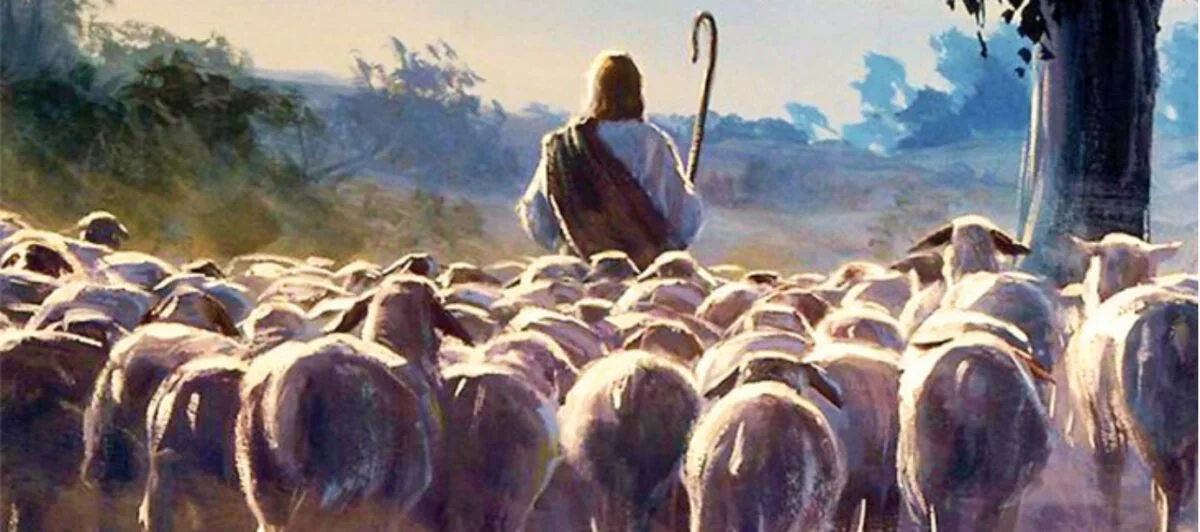
The Good Shepherd
When we think of the Good Shepherd, we most often think of Jesus laying down his life for the sheep (John 10:11), which, of course, crucially he did. But the parable of the Good Shepherd also teaches us another important lesson: how Jesus presented the good news and made disciples. Here are five lessons we can learn from his example.
He knew them by name (John 10:3)
To this day in the Middle East, a shepherd will go into a crowded sheepfold and call out his own sheep one by one by name, much as we would call the family dog. Jesus got to know his 'sheep' by name. There were the twelve disciples, but also Lazarus, Mary, Martha, and even tax collectors like Zacchaeus.
Jesus often visited people in their homes and shared meals with them, even when it was controversial to do so (Luke 19:1-10). He painstakingly spent time with individuals and stopped for the one — like the woman at the well. He didn't know people from a distance; he spent time with them and immersed himself in their communities. He became known as the 'friend of sinners' (Matt 11:19).
And they knew him (John 10:14)
Not only did he know them, he allowed them to know him. He invited them to see where he was staying (John 1:38-39). Throughout his ministry he was vulnerable and open with them, and became their friend (John 15:15).
He laid down his life for the sheep (John 10:11)
Jesus' sacrificial love is seen not only in going to the cross, but also in his identification with the sick and oppressed (Matthew 8:16-17), his washing of the disciples' feet (John 13), and his brave, sacrificial defence of his friends in the Garden of Gethsemane (John 18:1-9). Laying down his life was a lifestyle, not just a moment.
I have other sheep that are not of this fold (John 10:16)
Jesus said he had other sheep not of the people of Israel. This, of course, includes people from the Muslim community. Are we willing to love them as our Good Shepherd loves us?
Jesus sets us a model to follow: to know Muslims by name, to share meals with them, to get to know our Muslim neighbours and their concerns, and to invite them into our homes so that they can get to know us — making ourselves vulnerable and open to them. This is particularly important in the Muslim community, as Muslims will often watch our actions more than our words to discern whether we, and our gospel, are authentic. By being a friend of Muslims, we become more like our good Shepherd.
Not a hired hand (John 10:12)
One of the specific reasons Jesus was put to death was for healing on the Sabbath (Matthew 12:9-14). Why did Jesus heal the man on the Sabbath? He knew how the Jewish leaders would react and could have waited until the next day. He acted deliberately to bring truth, so that those who wanted to could be set free from legalism and religion — and this was at great personal cost. Sometimes speaking the gospel in the Muslim community will provoke a hostile reaction. Our aim is never to give offence, but sometimes the gospel carries its own offence. The difference is this: one person gives offence for their own sake (by being contentious, arrogant and disrespectful), at a cost to others; another offends for the sake of the hearers by telling the truth in love, at a cost to themselves.
If we can model these five lessons from Jesus, we won't just talk about the Good Shepherd — we'll look like him.