
The following lines are the first words we encounter on the Mahabba Network website:
We are a relational network giving people of Muslim heritage the opportunity to find and follow Jesus.
Our vision is to see ministry among people of Muslim heritage as a normal part of church life.
The Great Commission
To help us carry out our commission I have decided to focus on the example given us in John 4. The conversation and the context are very appropriate for us. The particular conversation is significant because it is with a woman; from the despised and ‘other’ community, the Samaritan; she is a nobody and regarded as immoral so remains unnamed. John 3 provides a contrast, where the conversation was with a man, Jewish, of moral standing and who is named – Nicodemus.
We learn from this story that Jesus came for everyone, including the despised and the excluded of their day; that Jesus is the Good News; Jesus is the son of God who has come to save the sinners and that by believing one may have life in his name (John 20:31).
It is extremely significant that Jesus had decided to go through Samaria, which other Jews would normally avoid and take the long way. Jesus decided to go to Samaria.
We learn from the story that Jesus is willing to go out of his way to do his work. He was willing to cross any barrier to reach the lost. Surely we cannot ask for a better model.
Over the years, to understand the biblical Samaritans people have attempted to place others who were marginalised and despised in their societies. In Chris Lansdown’s blog, focused on the 1960s America, the Good Samaritan is a member of the racist Klu Klux Klan.[1] In another blog, the Good Samaritan is a Biker. [2] I think if Jesus was telling the story today in the UK the Samaritan might be a Muslim[3] or a refugee![4]
Let’s meet our ‘Samaritans’
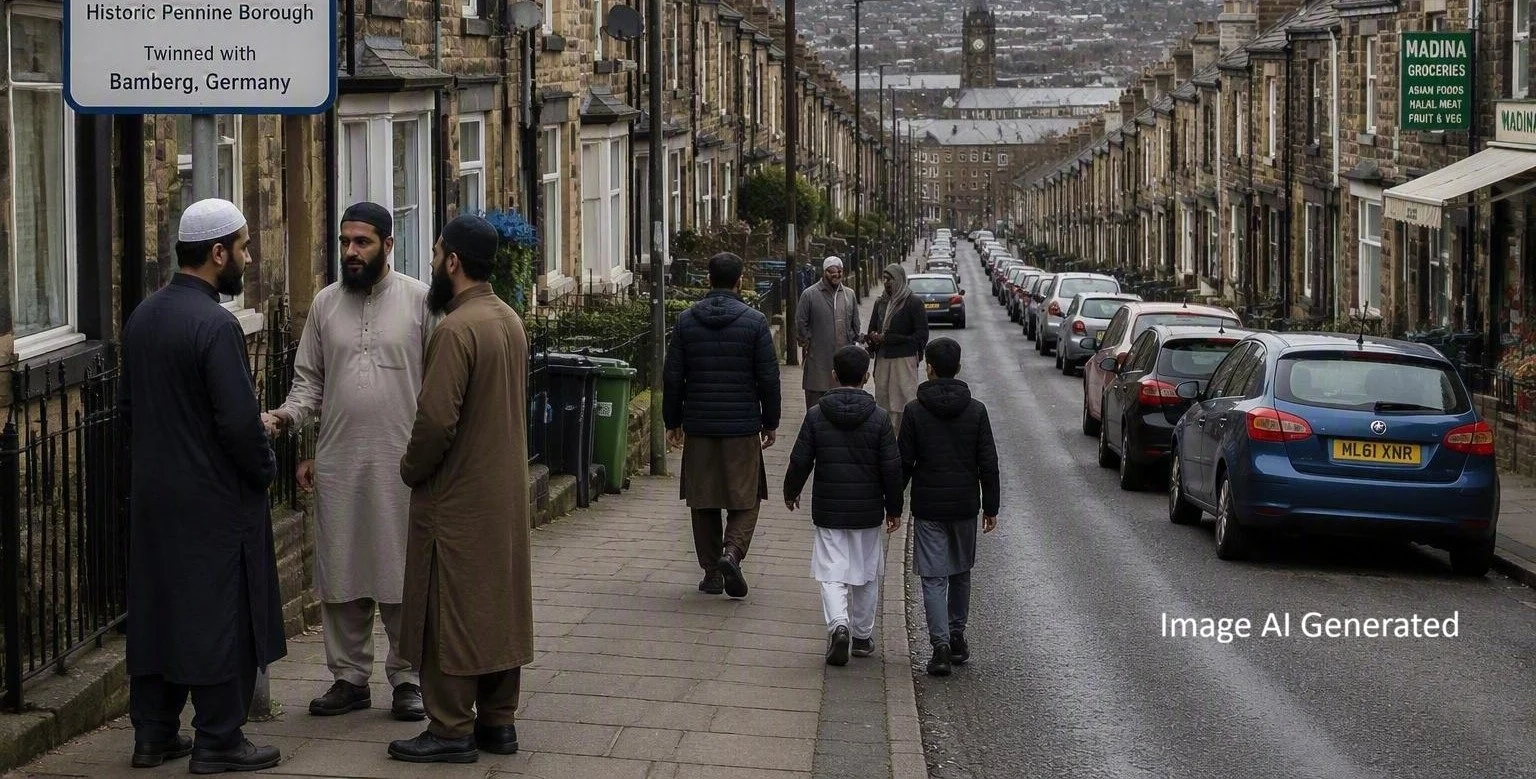
Muslims are all around us and yet some of us do not know any Muslims or struggle to meet them.
I thought I would ask some of those who are engaged in outreach as to where one can meet Muslims. So, I posted the following request in the All Mahabba (chat, prayer, share) WhatsApp group:
I’m compiling a list of places where Christians meet Muslims. Please help me by sharing your experiences.
It generated a long list of possibilities which are included below, hopefully without duplications.
This is where my husband and I have met most of our Muslim friends…in coffee shops, at the supermarket, at the bus stop, in Charity shops, in the Pound Shop, at the school gate, at the hospital, at the GP, at our English conversation sessions.
One posted: God willing, I am about to have a conversation at the Jobcentre. Another posted: at takeaways, at cafes and restaurants, on the market, at the drop-in for asylum seekers and refugees.
One person posted: in church (I am an MBB).
Other ideas shared included visiting mosques, at Church meetings, through friends, on protests for Palestine, meetings for better understanding, in my home, interfaith events, on the street, in parks, everyday life.
Another person posted:
In interfaith meetings (both formal and informal), at iftar and OpenMosque events hosted by mosques, around Tables often as guest to Muslim hosts - sharing bread together (companions), and hosting Muslim friends in our home. Talking in Urdu as I’m being driven to the airport by a friendly taxi driver and finding lots of common connections. Meeting in Chai-khana; just talking and sharing stories
Someone asked: I wonder if it’s different for women. I meet Afghan women through other women, or sometimes their husbands. I then visit them at home.
Yet another posted:
I am currently spending time with one woman by sitting with her as she practices driving. Another woman I pick up from her home to go for countryside walks.
Even in “non-Muslim” areas, Muslims may be present as taxi drivers.
On trains and buses (on & waiting for) I often meet Muslim women.
At work as co-workers & clients, giving advice or food.
Steve Bell (2003) had the following suggestions of where to meet Muslims:
By using their business services. In the workplace. Making a point of greeting them in the street (Mat 5:47). Door to door.
Roger Hooker and Christopher Lamb (1986) advised Christians, who wished to meet people of other faiths, to “loiter with intent” in the places where they are more likely to be found – “deliberately set aside time, say one or two afternoons a month, to loiter in a particular area”. They also suggested to drop into shops where, when they are not busy, the shopkeepers are always willing to talk to strangers.
The idea for this blog started when I was in deep conversation with the Kurdish guy at our local car wash. I had met him a couple of times before when we had introduced ourselves. This time I asked him how his Christmas was, asking whether he celebrated. He said no. Knowing he has young children, I asked him whether he did anything at all such as have a Christmas tree. He said no. Soon after at his asking, I was telling him about my faith story and conversion and baptism. It was a lengthy chat which only stopped when his phone rang.
The conversation
What barriers are we likely to face? Are we willing to cross those barriers? Are we willing to initiate our conversations, putting aside the cultural reserve?
I have always liked Andrew Smith’s approach of “smile and ask”. This has worked for me. During my time as a hospital chaplain I have had more than 5000 conversations, mostly with people of no faith and which has included Muslims. I start with a “hello, how are you” and trust the Holy Spirit to do the rest. And He does, He listens for me and speaks through me.
Steve Bell recommends that we Christians tell our own faith story. Here Andrew Smith advises that in such situations we should also be willing to listen to the stories of the people we are speaking with.
Jesus’ simple conversation at the well took on a very deep significance, moving from simple thirst-quenching water to Living Water. He begins the conversation with this world and moves it to the next, heaven. This may be possible for us too as we meet Muslims. We must not squander such possibilities but recognise them. We need to be open to the possibility of this happening.
Jesus had time. He did not indicate that he had other commitments to go onto. I don’t think he did any such thing that could be construed as our equivalent of looking at our watch in the middle of a conversation which indicates to the listener that we need to move on. We should always be prepared postpone or delay your next commitment so that we can stay in our current conversation longer than we had intended for it to take.
Bibliography
Bell, St. 2003. Friendship First. Study manual. Kitab Interserve Resources.
Hooker, R. & Lamb, C. 1986. Love the stranger. SPCK
Smith, A. 2018. Vibrant Christianity in multifaith Britain. BRF.
[1] A Modern Retelling of The Parable of The Good Samaritan – Chris Lansdown
[2] The Biker: A Modern Day Version of the Good Samaritan Parable - Owlcation
[3] Hindu man thanks Muslim activist after Leicester violence: ‘He saved my life’
[4] The Good (Samaritan) Muslim refugees | Global Sisters Report