
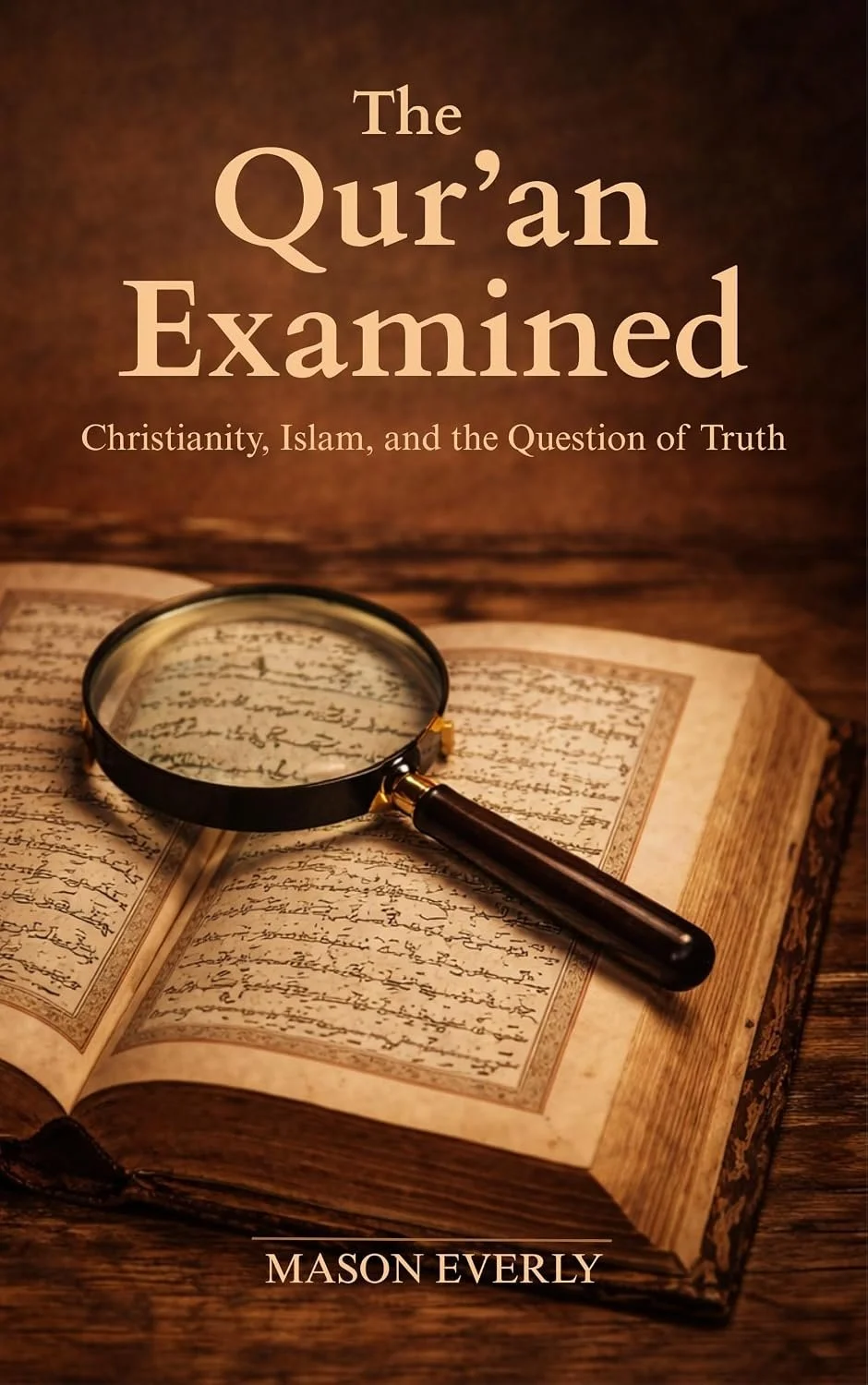
Description provided by the author:
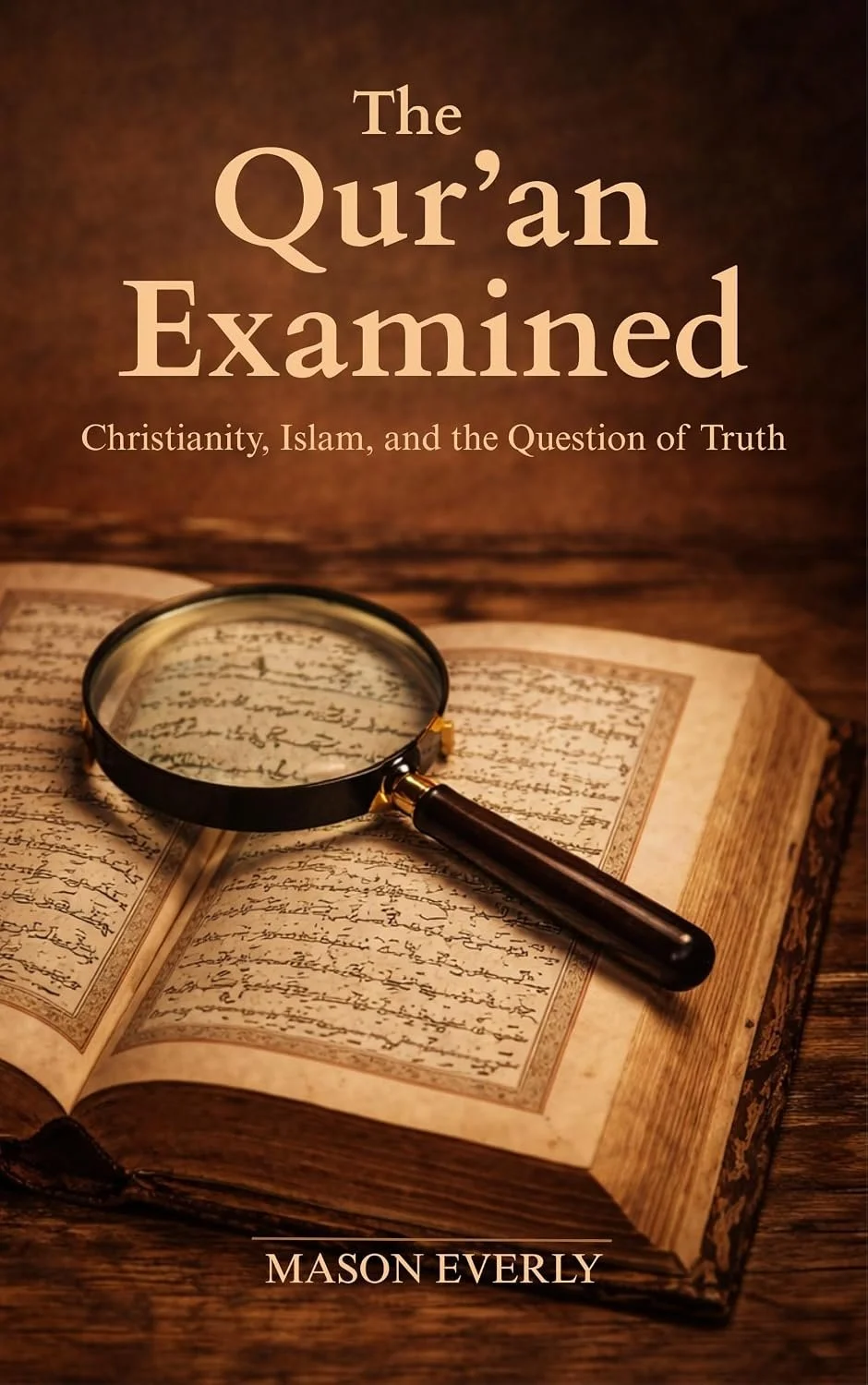
Mason Everly is the author of The Qur'an Examined: Christianity, Islam, and the Question of Truth (Dominion Truth, 2026) — a 52-chapter Christian examination of Islamic theology in dialogue with Christianity, written for pastors, missionaries, students, and anyone engaging Islam seriously without caricature or compromise.
It evaluates the Qur'an through textual analysis and ethical reasoning, designed to equip Christians, churches, and ministries for effective and respectful outreach to Muslims.
The book is structured to analyse and engage with the central tenets of Islamic theology, specifically addressing:
Thematic Layout: 52 distinct chapters, making it suitable for weekly study or as a comprehensive reference guide
Methodological Approach: Emphasizes a text-driven examination of the Qur'an’s interpretive framework and ethical vision, avoiding polemics and caricature in favour of theological dialogue and understanding.
Ministerial Focus: Provides ministries with contextual knowledge and ethical reasoning required to address difficult textual passages and bridge the gap between Christian and Islamic belief systems.
Academic Restraint over Media Presence: Unlike highly public, confrontational online polemicists, Everly’s platform relies heavily on the written word, textbook study, and text-driven hermeneutics rather than viral media campaigns. This approach is designed to foster quiet, intellectual reflection and practical local church application.
masoneverly.author@gmail.com
amazon.co.uk/dp/B0GRM5DH9T
Review for Mahabba by Dave
Mason Everly sets out to examine Islam and Christianity by asking each faith the same questions and testing how they stand up to critical investigation. The book is readable with short chapters which stand on their own. It is written in a style to help memory and understanding by using rhythm, alliteration and rhyme to emphasise the main points. These pithy phrases are memorable and clearly express his teaching point without a complex wordy explanation. There is a certain amount of repetition where the same material is covered in similar ways in different chapters.
The book seeks to show Christianity’s superiority to Islam so making it a very comfortable read for the average Christian who will come away assured that following Christ answers all the important faith questions and supplies everything we need. They will be convinced that although Muslims are very sincere, can live a moral and upright life, worship with reverence and honour, Islam falls short in every question of life, faith, truth, and assurance.
Everly writes with a Western Christian perspective, answering questions that Christians ask in a way that Christians relate to. In doing this, Islam is sure to come off worse and not match up to this Christian worldview and method of analysing the world. However, a Middle Eastern Muslim person would be asking different questions and looking at the world and faith in a different way. After reading the book, a Christian person who approaches their Muslim friend armed with the arguments supplied is likely to be surprised that their Muslim friend has no problems with the contradictions, historical inaccuracies, and weaknesses in Islam’s faith system that Everly presents.
Because of the teaching in the mosque and the lifelong faith practice of many Muslims, they are comfortable with the belief that if the Qur’an says something and the Muslim teacher explains it, then it must be true. They have no questions about the authority and reliability of the Hadith or the accounts of Muhammed’s life and will use them with confidence. Although the book presents Christianity as the winner every time, I would warn the Christian reader that engaging with Muslims is not simple. Often the logical steps suggested by this book do not address the way their Muslim friend looks at life and faith. Most Muslims would not think about their faith along the lines of Western logical argumentation. The journey a Muslim must make to come to trust the truth claims of Christianity may be a long tortuous road. Logical argument is not likely to be the main thing.
Everly’s presentation is that Christ must be central and that Christianity is about relationship and Islam is about command; that Christianity is based on an historical act – the death and resurrection of Christ, but Islam is based on unauthenticated statements; he emphasises the internal change that Christ offers verses the focus on external regulation of Islam; and he continually mentions the assurance found in a faith based on God’s historical actions and promises contrasting this with the uncertainty he sees in Islam caused by belief in arbitrary judgment at the end of time. His approach is to look at faith issues as a spectrum seeing Islam at one end and Christianity at the other. There seems to be no recognition of the range of variation within Islam and among Muslim people.
The book contains some helpful chapters on discipling Believers from a Muslim Background addressing the important areas that need to be part of a discipleship program and the priorities a church or mentor should focus on to help a Believer from a Muslim Background to grow.
There are also some useful chapters on how to reach out to Muslim people explaining that in order for Muslims to come to Christ they need to see the seriousness of their position as distant from God before they will engage with the challenges Christianity presents to Islam. He explains too, that for discussion to work, both sides need to be willing to subject their beliefs to the same criteria of investigation.
Although the ideas presented in the book may not be immediately successful in persuading a Muslim person that their faith has a weak foundation, the facts and truth claims described will be a good basis to help a Christian person facing Muslim arguments to stand firm and be confident when they are confronted with accusations and arguments which seem to undercut the basis for their trust in Jesus.